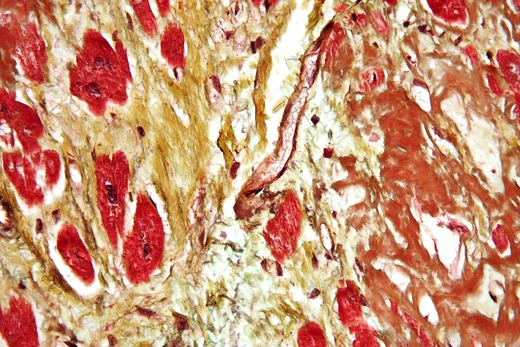
Cardiogenic shock
A life-threatening condition from heart pump failure.

Cardiogenic shock is a medical emergency resulting from inadequate blood flow to the body's organs due to the dysfunction of the heart. It is most commonly precipitated by a heart attack and is estimated to complicate 5-10% of all heart attacks. The condition is difficult to reverse fully, even with early diagnosis, but early initiation of treatment may improve outcomes.
- field
- Cardiology, Emergency Medicine
- known_for
- Medical emergency due to heart dysfunction causing inadequate blood flow
- mortality_30_day
- 40% after heart attack
- mortality_1_year
- 50% after heart attack
- common_cause
- Heart attack (5-10% of cases)
Lore & Background
Cardiogenic shock is caused by the failure of the heart to pump effectively, most often from damage to the heart muscle due to a heart attack. Other causes include abnormal heart rhythms, cardiomyopathy, heart valve problems, ventricular outflow obstruction, myocardial contusion, ventriculoseptal defects, or sudden depressurization releasing air bubbles into the bloodstream. In heart attack cases, shock can develop at the time of the attack or after, with a median time of about 5.5–6 hours; registry data show 74% develop shock within 24 hours and 46.6% within 6 hours. The left anterior descending artery and left main coronary artery are the most commonly blocked arteries leading to cardiogenic shock.
Reader's Guide
Cardiogenic shock represents a critical condition where the heart cannot maintain adequate perfusion to vital organs. Signs include low urine output (<30 mL/hour), cool extremities, decreased consciousness, severely low blood pressure, shortness of breath from pulmonary edema, and distended jugular veins. Diagnosis involves electrocardiogram, echocardiography, pulmonary artery catheter for invasive hemodynamic monitoring, and possibly heart muscle biopsy for unknown cardiomyopathy. Treatment depends on cause, with initial goals to improve blood flow. Medications like dobutamine and milrinone enhance heart contraction. For heart attack cases, opening blocked arteries reduces mortality. When medications fail, mechanical support devices such as intra-aortic balloon pumps, left ventricular assist devices (e.g., Impella), or venous-arterial extracorporeal membrane oxygenation may be used as bridges to definitive therapy. Mortality rates remain high—40% at 30 days and 50% at one year after heart attack—but have been decreasing in the United States, likely due to rapid identification and treatment advances. Multi-organ failure is associated with higher mortality.
Did You Know?
- Cardiogenic shock complicates 5-10% of all heart attacks.
- The 30-day mortality rate for cardiogenic shock after a heart attack is 40%, with a 1-year mortality rate of 50%.
- The left anterior descending artery and left main coronary artery are the two most commonly blocked arteries in heart attacks that lead to cardiogenic shock.
- Intra-aortic balloon pumps do not directly increase cardiac output but decrease the pressure the heart must pump against.
Frequently Asked Questions
What is Cardiogenic shock?
Cardiogenic shock is a medical emergency in which the heart can no longer pump enough blood to keep the body's organs oxygenated and nourished. It represents a critical, acute breakdown of cardiac output that threatens survival within hours if left untreated.
What triggers Cardiogenic shock?
The most frequent precipitating event is a heart attack that damages enough myocardium to cripple pumping capacity. This complication develops in roughly 5 to 10 percent of all myocardial infarctions, making it the single most common origin of the condition.
How deadly is Cardiogenic shock?
Approximately 40 percent of affected patients die within 30 days of the triggering heart attack, and about half have not survived by the one-year mark. Those grim survival figures place it among the most lethal acute conditions in cardiology.
Can Cardiogenic shock be fully reversed?
Complete reversal is rare even with early diagnosis, but prompt initiation of supportive and mechanical therapies can meaningfully shift the odds in a patient's favor. Speed from recognition to treatment remains the single biggest determinant of whether a patient survives.
Why is Cardiogenic shock a landmark entry in the Cardiovascular & Blood series?
It sits at the crossroads of Cardiology and Emergency Medicine, marking the moment chronic cardiac disease becomes an immediate, life-threatening crisis. Its high mortality and extremely narrow treatment window make it a defining clinical challenge for both specialties.
More in Cardiovascular & Blood 1-24
Spotted an error? Know more?
This is a living reference — every entry is fact-audited, and reader corrections feed straight into our audit queue. Suggest an edit · See this site's audit record