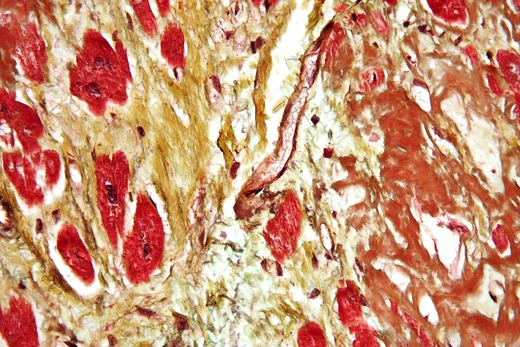
Cardiac arrest
Cardiac arrest is the sudden loss of heart function.

Cardiac arrest, also known as sudden cardiac arrest (SCA), is a condition in which the heart suddenly and unexpectedly stops beating or beats in a way that fails to produce a pulse. It is a critical medical emergency that leads to hemodynamic collapse, decreased blood flow to the brain and other organs, and can result in loss of consciousness, brain cell death, coma, or persistent vegetative state if not promptly treated.
- field
- Medicine (Cardiology)
- known_for
- Sudden cessation of effective heart function requiring CPR and defibrillation
- out_of_hospital_percentage
- 61%
- in_hospital_percentage
- 39%
- common_underlying_cause
- Coronary artery disease (68% of sudden cardiac deaths in US)
Lore & Background
Cardiac arrest is typically identified by the absence of a central pulse and abnormal or absent breathing. It is most often caused by arrhythmias such as ventricular fibrillation and ventricular tachycardia, though the specific mechanism is difficult to identify in out-of-hospital cases. Structural heart disease, particularly coronary artery disease, is a common underlying condition, with additional risk factors including age, cardiovascular disease, heart failure, inherited arrhythmias, major blood loss, lack of oxygen, electrolyte disturbances, electrical injury, and intense physical exercise.
Reader's Guide
It becomes more common with age and affects males more often than females; black people are twice as likely to die from it as white people. Treatment focuses on rapidly achieving return of spontaneous circulation through CPR, defibrillation, or cardiac pacing, followed by post-resuscitation care to protect neurological function, including airway management, temperature management, and consideration of an implantable cardiac defibrillator. The condition is not preceded by warning symptoms in about half of cases, and bystanders are advised to call emergency services and initiate CPR when signs such as unconsciousness, abnormal breathing, or no pulse are present.
Did You Know?
- Cardiac arrest is not preceded by any warning symptoms in approximately 50 percent of people.
- Coronary artery disease underlies 68 percent of sudden cardiac deaths in the United States.
- Among those whose pulses are re-established, targeted temperature management may improve outcomes.
- Black people in the United States are twice as likely to die from cardiac arrest as white people.
Frequently Asked Questions
Who is Cardiac arrest in Cardiovascular & Blood 1-24?
Cardiac arrest is the series entry representing the sudden, unexpected loss of effective heart function, classified under Cardiology. It is defined as a critical emergency in which the heart either halts entirely or beats in a rhythm too chaotic to generate a pulse.
What are Cardiac arrest's powers or role in the canon?
Its defining 'ability' is the abrupt collapse of hemodynamics, which within seconds starves the brain and other organs of oxygenated blood. Its narrative role is to serve as the ultimate time-critical emergency that demands immediate chest compressions and a defibrillation shock to restore a perfusing rhythm.
What is the most common cause that triggers Cardiac arrest?
Coronary artery disease is the primary underlying trigger in the canon, accounting for roughly 68% of sudden cardiac deaths in the United States. Other arrhythmogenic conditions can also set the entry in motion, but CAD remains the dominant origin story.
How does Cardiac arrest's story end?
The narrative resolves only when a bystander or medical team initiates high-quality CPR and delivers a defibrillation shock to re-establish a viable rhythm. Without that intervention, the story progresses to irreversible brain-cell death, coma, or a persistent vegetative state.
Why is Cardiac arrest important to the Cardiovascular & Blood 1-24 series?
It anchors the canon as the defining resuscitation emergency that tests every protocol and bystander response. With approximately 61% of its appearances occurring in out-of-hospital settings, it is the series' most publicly visible and time-sensitive entry.
More in Cardiovascular & Blood 1-24
Spotted an error? Know more?
This is a living reference — every entry is fact-audited, and reader corrections feed straight into our audit queue. Suggest an edit · See this site's audit record