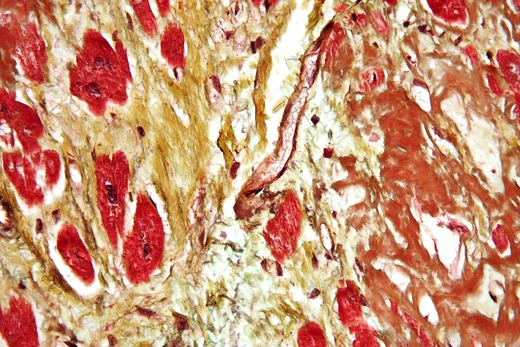
Blood transfusion
Intravenous transfer of blood components to treat medical conditions.

Blood transfusion is the process of transferring blood products into a person's circulation intravenously. It is used for various medical conditions to replace lost components of the blood. Early transfusions used whole blood, but modern practice commonly uses components such as red blood cells, plasma, platelets, and other clotting factors.
- field
- Medicine
- known_for
- Transfer of blood products intravenously to replace lost blood components
- key_components
- Red blood cells, plasma, platelets, clotting factors
- modern_trigger_level
- Hemoglobin 70–80 g/L for red cell transfusion
- common_donor_type
- Allogeneic (homologous) transfusion from anonymous donors
Lore & Background
Blood transfusion involves transferring blood products into a person's circulation intravenously. Historically, doctors believed blood was homogeneous, leading to many patient deaths from incompatible transfusions. Modern practice uses components like red blood cells, plasma, and platelets, with whole blood reserved mainly for trauma settings. Red blood cells supply oxygen via hemoglobin; plasma is the yellowish liquid containing proteins; platelets aid clotting; white blood cells are rarely transfused.
Reader's Guide
Blood transfusion is a cornerstone of modern medicine, enabling treatment of anemia, trauma, clotting disorders, and other conditions. The shift from whole blood to component therapy has improved safety and efficiency, allowing targeted treatment. Compatibility testing—including ABO and Rh typing, antibody screening, and crossmatching—is critical to prevent adverse reactions. Leukoreduction and pathogen reduction technologies further reduce risks. Despite advances, transfusion carries risks, and guidelines now recommend more restrictive triggers (e.g., hemoglobin 70–80 g/L) to avoid unnecessary exposure. The World Health Organization recommends screening all donated blood for HIV, hepatitis B, hepatitis C, and syphilis, though some countries lack resources. Blood donation is motivated by altruism but hindered by fear and distrust. The field continues to evolve with better storage, testing, and processing methods.
Did You Know?
- Early doctors thought blood was homogeneous, leading to deaths from incompatible transfusions.
- Red blood cells are typically stored at 1–6 °C, platelets at 20–24 °C with agitation, and plasma frozen at −18 °C or lower.
- Leukoreduction removes white blood cells to reduce risks like febrile reactions and CMV transmission.
- Pathogen reduction using riboflavin and UV light can inactivate viruses, bacteria, parasites, and white blood cells in blood products.
From Whole Blood to Precision Components
Early transfusion practice relied on transferring whole blood directly into a patient's intravenous circulation. At the time, the medical community operated under the assumption that blood was a single, uniform substance. This misconception carried a terrible cost: numerous patients perished after receiving incompatible blood, simply because the distinct elements within it had not yet been identified. Modern medicine has moved far beyond that era. Today, clinicians typically transfuse only the specific component a patient needs—red blood cells to restore oxygen-carrying capacity, plasma to replenish proteins and buffering capacity, platelets to support clotting, or concentrated clotting factors for coagulation disorders. White blood cells are reserved for exceedingly rare situations, as granulocyte transfusion offers limited clinical benefit. Interestingly, whole blood has experienced a partial revival in the trauma setting, where rapid volume replacement takes priority over component separation. This evolution from a one-size-fits-all approach to targeted, component-specific therapy represents one of transfusion medicine's most significant advances.
Calibrating the Decision to Transfuse
Determining when and how much blood to give is a carefully calibrated clinical judgment. Evidence has since pushed that trigger lower, to roughly 70–80 g/L, because studies demonstrated that more conservative thresholds actually produce better patient outcomes. Administering larger volumes has been shown to worsen outcomes, which is why the one-and-recheck protocol is emphasized. Patients experiencing cardiovascular symptoms such as chest pain or dyspnea may warrant transfusion even at slightly higher levels. When anemia stems from iron deficiency and the patient is hemodynamically stable, oral or intravenous iron supplementation is generally preferred over transfusion on both efficacy and safety grounds. Fresh frozen plasma addresses clotting-factor deficiencies, while platelet products are reserved for thrombocytopenic patients at risk of bleeding.
The Global Pipeline from Donor to Patient
The journey of a blood unit from a donor's vein to a recipient's circulation involves multiple safeguards. In most high-income settings, donations are anonymous, yet every unit remains individually traceable through collection, testing, component separation, storage, and final administration—a chain that enables rapid investigation if a transfusion reaction or disease transmission is suspected. Blood is typically drawn intravenously as whole blood mixed with an anticoagulant, then separated by centrifugation into red cells, plasma, and platelets. Each component demands distinct storage: red cells at 1–6 °C, platelets at 20–24 °C under continuous agitation, and plasma frozen at −18 °C or below to preserve clotting factors. Plasma can be further fractionated into albumin, clotting-factor concentrates, cryoprecipitate, fibrinogen, and immunoglobulins. The WHO mandates screening for HIV, hepatitis B and C, syphilis, and, where relevant, Chagas disease and malaria; yet ten countries still lack the capacity to test for at least one of these core infections, largely because testing kits are unavailable. ABO and Rh compatibility testing is universal, and platelet products receive additional bacterial screening given their room-temperature storage.
Donation Culture and the Human Side of Safety
Behind every transfusion stands a donor, and the motivations driving that act are overwhelmingly prosocial—altruism, selflessness, and a desire to help others. Conversely, the principal deterrents are fear, institutional distrust, and, in some historical contexts, perceived racial discrimination in blood-collection practices. In developing regions, voluntary non-remunerated donation is less common; instead, replacement donors (family or friends of the recipient) and paid donors supply much of the blood, a pattern linked to concerns about infection transmission and local cultural beliefs. The question of whether an alcohol swab alone, or an alcohol swab followed by an antiseptic, best prevents donor-site contamination remains unresolved in the literature. For immunocompromised recipients—such as stem-cell transplant patients or individuals with T-cell disorders—donors may be screened for cytomegalovirus, though this is not universally mandated because leukoreduced products are generally considered safe from CMV transmission and most donors are already seropositive without active viremia. Allogeneic transfusion, using another person's blood, vastly outnumbers autologous self-donation procedures, making the integrity of the donor pool and the rigor of testing pipelines critical to public health.
Frequently Asked Questions
What is Blood transfusion in the Cardiovascular & Blood series?
Blood transfusion is the medical procedure of delivering blood products intravenously into a patient's circulation to restore components that have been lost or depleted. It sits at the intersection of hematology and critical care, serving as a lifeline whenever a patient's own blood can no longer meet their body's demands.
What are Blood transfusion's key components and what do they do?
Modern transfusion practice breaks blood into targeted parts—red blood cells for oxygen carriage, plasma for volume and protein support, platelets for clotting, and specific clotting factors for coagulation disorders. Selecting the right component means a patient receives only what they actually need rather than a blanket whole-blood infusion.
At what point does a patient typically qualify for a red-cell Blood transfusion?
In current clinical guidelines, a hemoglobin level falling into the 70–80 g/L range is the most commonly cited threshold that prompts a red blood cell transfusion in stable, non-surgical patients. This 'trigger level' balances the risk of anemia against the inherent risks of any transfusion.
Where does Blood transfusion's blood come from in most cases?
The vast majority of transfusions are allogeneic (homologous), meaning the blood products come from anonymous, unrelated donors rather than from the patient themselves. This system relies on a continuous chain of voluntary donation, screening, and component separation to keep supply safe and adequate.
Why is Blood transfusion considered a cornerstone of modern medicine?
It directly replaces the specific blood elements a patient has lost through trauma, surgery, hemorrhage, or chronic disease, making otherwise fatal situations survivable. Without this procedure, many operations, cancer regimens, and emergency interventions simply could not be performed safely.
More in Cardiovascular & Blood 1-24
Spotted an error? Know more?
This is a living reference — every entry is fact-audited, and reader corrections feed straight into our audit queue. Suggest an edit · See this site's audit record