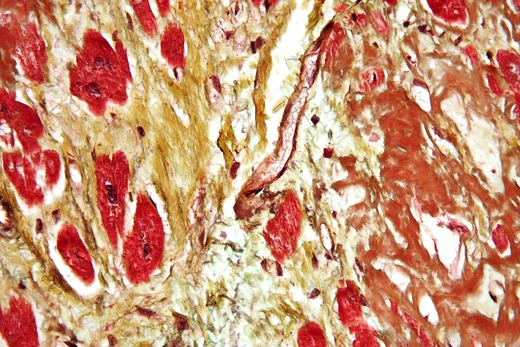
Bleeding
Blood escaping from damaged vessels; hemostasis is critical.

Bleeding, also known as hemorrhage or blood loss, is the escape of blood from the circulatory system through damaged blood vessels. It can occur internally or externally, and excessive loss can lead to hypovolemia and death by exsanguination. The control of bleeding, called hemostasis, is a critical component of first aid and surgery.
- definition
- Blood escaping from the circulatory system from damaged blood vessels
- types
- Includes intracranial, cerebral, subarachnoid, subconjunctival, pulmonary, gastrointestinal, urinary, gynecologic, and vascular hemorrhages
- causes
- Traumatic injury or underlying medical condition
- medical bleeding causes
- Intravascular, intramural, or extravascular changes; conditions like hemophilia, Von Willebrand disease, NSAID or warfarin use; infections such as Ebola, Marburg virus, yellow fever
- survivable loss
- A healthy person can endure 10–15% total blood volume loss without serious difficulties
- imaging
- Dioxaborolane chemistry enables radioactive fluoride (18F) labeling of red blood cells for PET imaging of intracerebral hemorrhages
Lore & Background
Bleeding arises from traumatic injury or underlying medical conditions. Traumatic causes include abrasions, lacerations, puncture wounds, contusions, crush injuries, and ballistic trauma. Medical bleeding results from intravascular changes (e.g., high blood pressure, clotting factor deficiencies), intramural changes (e.g., aneurysms, arteriovenous malformations), or extravascular changes (e.g., infections, tumors). Common medical bleeding disorders include hemophilia A (Factor VIII deficiency), hemophilia B (Factor IX deficiency), and Von Willebrand disease. Medications such as NSAIDs (including aspirin and ibuprofen) and warfarin increase bleeding risk by impairing platelet function or clotting factor production.
Reader's Guide
Bleeding is a fundamental medical concept with broad clinical significance. The distinction between traumatic and medical causes guides diagnosis and treatment. Understanding hemostasis—the process of stopping bleeding—is essential for first aid and surgery. The article notes that a healthy person can tolerate 10–15% blood loss, which informs transfusion thresholds. Medical bleeding from anticoagulants like warfarin requires careful monitoring, especially during antibiotic use that reduces vitamin K production. Imaging advances, such as PET using 18F-labeled red blood cells, allow precise localization of intracerebral hemorrhages. The classification of bleeding by anatomical site (e.g., intracranial, gastrointestinal) and by cause (traumatic vs. medical) provides a framework for clinical management.
Did You Know?
- A healthy person can endure a loss of 10–15% of total blood volume without serious medical difficulties.
- Aspirin irreversibly inhibits platelet activation, with effects lasting about ten days until platelets are replaced.
- Warfarin acts by inhibiting the production of Vitamin K in the gut, which is required for clotting factors II, VII, IX, and X.
- Infectious diseases such as Ebola, Marburg virus disease, and yellow fever can cause bleeding.
Frequently Asked Questions
What is Bleeding in the Cardiovascular & Blood series?
Bleeding describes blood leaking out of the circulatory system once a vessel is damaged, whether the loss stays internal or spills externally. If left unchecked, severe loss can trigger hypovolemia and ultimately kill through exsanguination.
What types of Bleeding are listed in the canon?
The entry catalogues a broad range of hemorrhage categories, including intracranial, cerebral, subarachnoid, subconjunctival, pulmonary, gastrointestinal, urinary, gynecologic, and vascular types. Each represents blood escaping at a distinct anatomical site.
What causes Bleeding?
Bleeding can result from traumatic injury or from an underlying condition involving intravascular, intramural, or extravascular changes. Specific triggers include clotting disorders like hemophilia and Von Willebrand disease, medications such as NSAIDs or warfarin, and viral infections including Ebola, Marburg virus, and yellow fever.
How much blood can a person lose before it becomes dangerous?
A healthy individual can generally tolerate losing roughly 10–15% of total blood volume without serious difficulty. Once loss exceeds that threshold, the body begins to struggle with maintaining adequate circulation.
How is Bleeding controlled and imaged?
Hemostasis—the process of stopping a bleed—is a cornerstone of both first aid and surgical practice. On the diagnostic side, dioxaborolane chemistry enables radioactive fluoride-18 labeling of red blood cells for PET imaging of intracerebral hemorrhages.
More in Cardiovascular & Blood 1-24
Spotted an error? Know more?
This is a living reference — every entry is fact-audited, and reader corrections feed straight into our audit queue. Suggest an edit · See this site's audit record