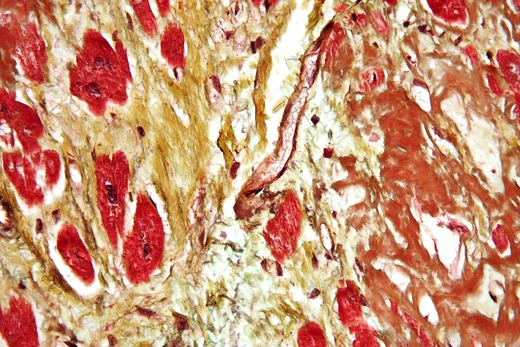
Atherosclerosis
Chronic arterial disease driven by cholesterol and inflammation.

Atherosclerosis is a pattern of the disease arteriosclerosis, characterized by the development of atheromatous plaques in the walls of arteries. It is a chronic inflammatory disease involving many different cell types and is driven by elevated blood levels of cholesterol, primarily LDL. These lesions lead to narrowing of the arteries, and the disease is the number one cause of death and disability in developed countries.
- field
- Cardiovascular pathology
- known_for
- Chronic inflammatory disease causing arterial plaque buildup, leading to heart attack, stroke, and peripheral artery disease
- affected_population
- Almost all people affected to some degree by age 65
- primary_risk_factors
- Abnormal cholesterol levels, high blood pressure, diabetes, smoking, obesity, genetic factors
Lore & Background
Atherosclerosis generally starts when a person is young and worsens with age. Early atherosclerotic processes likely begin in childhood, with fibrous and gelatinous lesions observed in the coronary arteries of children and fatty streaks in juveniles. The disease is typically asymptomatic for decades because arteries enlarge at all plaque locations, compensating for the buildup. Most plaque ruptures do not produce symptoms until severe narrowing or closure of an artery due to clots occurs. Signs and symptoms only happen after severe narrowing impedes blood flow to different organs, and most patients realize they have the disease only when they experience cardiovascular disorders such as stroke or heart attack.
Reader's Guide
Atherosclerosis is significant as the leading cause of death and disability in developed countries. The disease process involves complex interactions between elevated LDL cholesterol, inflammatory processes, and genetic factors. Risk factors include modifiable elements such as diet, smoking, and sedentary lifestyle, as well as nonmodifiable factors like advanced age and genetic abnormalities. Treatment ranges from lifestyle changes and medications like statins to invasive procedures such as percutaneous coronary intervention or coronary artery bypass graft. The disease has ancient origins, with evidence suggesting genetic mutations linked to CMAH may have occurred over two million years ago in hominin ancestors.
Did You Know?
- The disease is typically asymptomatic for decades because arteries enlarge at all plaque locations, compensating for the buildup.
More in Cardiovascular & Blood 1-24
Spotted an error? Know more?
This is a living reference — every entry is fact-audited, and reader corrections feed straight into our audit queue. Suggest an edit · See this site's audit record