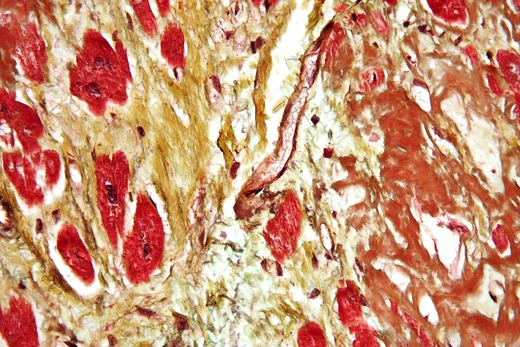
Arteriosclerosis
Hardening of the arteries, a set of vascular disorders.

Arteriosclerosis, literally meaning 'hardening of the arteries,' is an umbrella term for a set of vascular disorders characterized by abnormal thickening, hardening, and loss of elasticity in the walls of arteries. The disease process gradually restricts blood flow to body organs and tissues and can proceed to severe health risks brought on by atherosclerosis, the specific form caused by buildup of fatty plaques, cholesterol, and other substances in and on arterial walls. Risk factors include family history, smoking, and obesity.
- field
- Vascular medicine, pathology
- known_for
- Umbrella term for arterial hardening disorders, including atherosclerosis
- risk_factors
- Family history, smoking, obesity
- types
- Atherosclerosis, arteriolosclerosis, Monckeberg's arteriosclerosis, hyperplastic, hyaline
Lore & Background
The lesions of arteriosclerosis begin when the intima of an artery starts to fill up with the deposition of cellular wastes. As these develop, they can take different forms, all linked through common features such as stiffening of arterial vessels, thickening of arterial walls, and the degenerative nature of the disease. Atherosclerosis affects large and medium-sized arteries, while arteriolosclerosis only affects small arteries and arterioles. Monckeberg's arteriosclerosis is seen mostly in the elderly, commonly in arteries of the extremities.
Reader's Guide
Arteriosclerosis is significant as an umbrella term encompassing several vascular disorders that lead to abnormal thickening, hardening, and loss of elasticity in arterial walls. The disease process gradually restricts blood flow, and signs and symptoms depend on the vessel affected, ranging from chest pain in coronary artery disease to sudden weakness or confusion in cerebrovascular accidents. Diagnosis can be based on physical exam, blood test, and EKG. Treatment includes preventive measures, medications for high cholesterol and high blood pressure, lifestyle changes, and surgical options such as angioplasty, coronary artery bypass surgery, endarterectomy, and thrombolytic therapy. The term was coined by Jean Lobstein while analyzing calcified arterial lesions, and the diagnostics and clinical implications were not recognized until the 20th century.
Did You Know?
- The term 'arteriosclerosis' is derived from Greek words meaning 'artery' and 'hardened'.
- Atherosclerosis is the specific form of arteriosclerosis caused by buildup of fatty plaques, cholesterol, and other substances.
- Family history is the most significant independent risk factor for coronary artery disease.
More in Cardiovascular & Blood 1-24
Spotted an error? Know more?
This is a living reference — every entry is fact-audited, and reader corrections feed straight into our audit queue. Suggest an edit · See this site's audit record